KashiFab supplier diligence - India to your market
How to choose an Indian fabric supplier for clients worldwide
At KashiFab we help overseas buyers evaluate whether an Indian fabric supplier is workable - before a purchase order. Use the diligence scorecard below, watch for red flags, and send an enquiry with the questions that actually matter for programmes in the United States, Europe, Southeast Asia, or the Middle East.
- Supplier scorecard
- Red flags to reject early
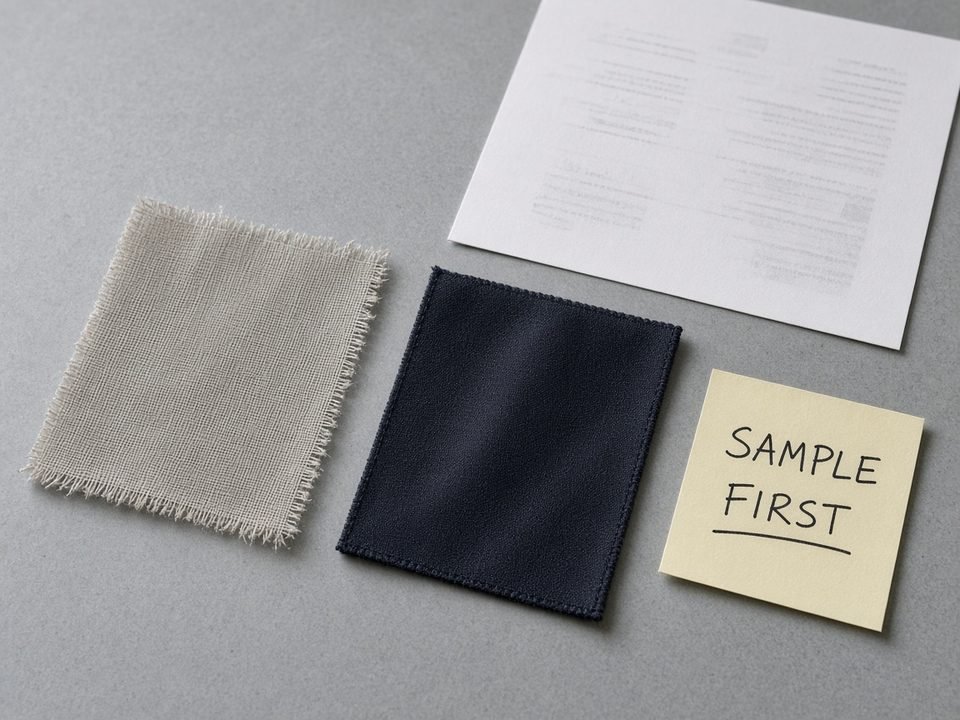
- Sample before PO
- US, EU, SEA, Middle East
Export desk
Business enquiry
What overseas buyers get wrong
- Price before sample lockBuyers who shortlist only on quoted metre rate often discover shade, hand, or usable width drift after the first carton - when rework costs more than the saving.
- Catalogue photos are not a lockA polished website or WhatsApp album does not prove the supplier can repeat construction across lots for a US showroom or EU boutique light.
- Vague "export ready" claimsIf packing, documentation talk, and Incoterms preferences stay foggy until after payment, the risk sits with the overseas office - not the mill.
Useful Discovery
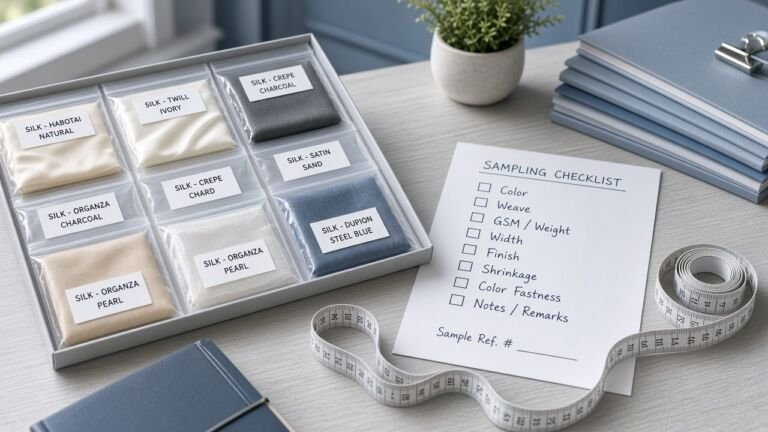
Ask for a written sample lock, not a verbal "same as photo"
When we help clients abroad shortlist suppliers - including working with KashiFab - the turning point is usually a dated sample approval: shade method, GSM/hand, usable width, and any motif scale. Without that paper trail, reorder talk becomes negotiation by memory.
Interesting Find
Communication quality predicts lot consistency
Teams in Germany, Singapore, and the UAE often tell us the same pattern: suppliers who answer construction questions in writing before the first sample also handle shade complaints cleaner after metres ship. Silence before PO is a diligence signal, not a style preference.
Indian fabric supplier diligence scorecard
Score each pillar honestly for any supplier you are evaluating - including us. Open a pillar, mark what you can verify today, then send an enquiry with the gaps you still need answered. This is the decision module for this page - not a fabric catalogue.
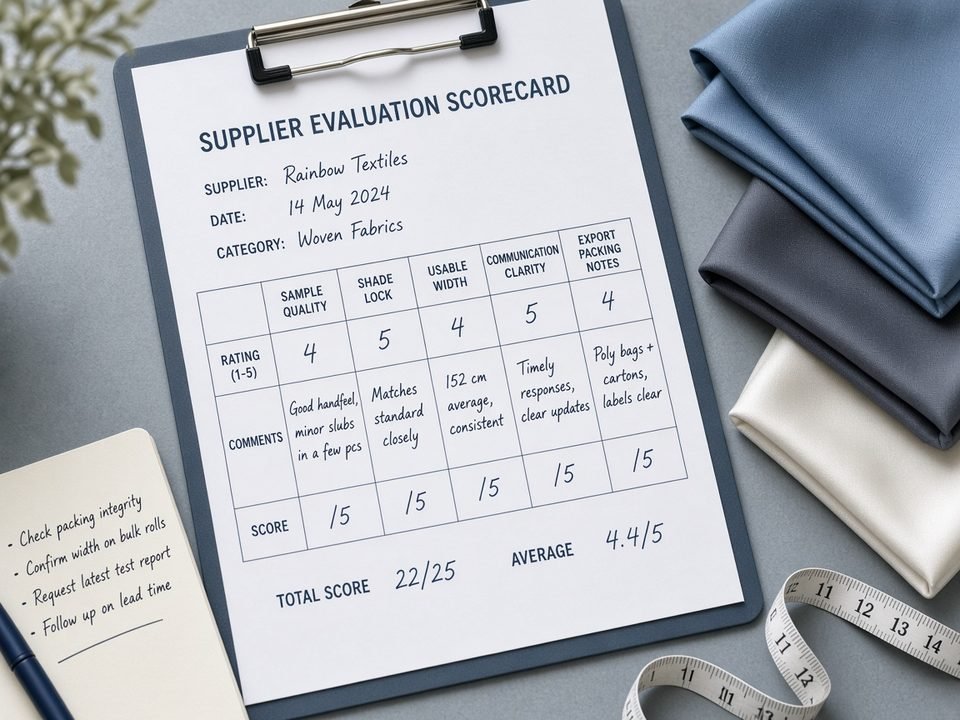
01 Sample & constructionCan they lock cloth, not only talk?
02 Colour & market lightWill shade survive your sell light?
03 Communication & brief disciplineDo answers stay written and specific?
04 Export path honestyIs packing and paperwork talk real?
Red flags that should pause a PO
These patterns show up often when overseas offices rush supplier selection. Pause and sample - or walk away - when you see them.
- Metre rate without construction - a number with no weave, GSM band, or usable width is not a comparable quote.
- Refusal to sample new constructions - "trust the photo" is not diligence for a first programme into the US or Europe.
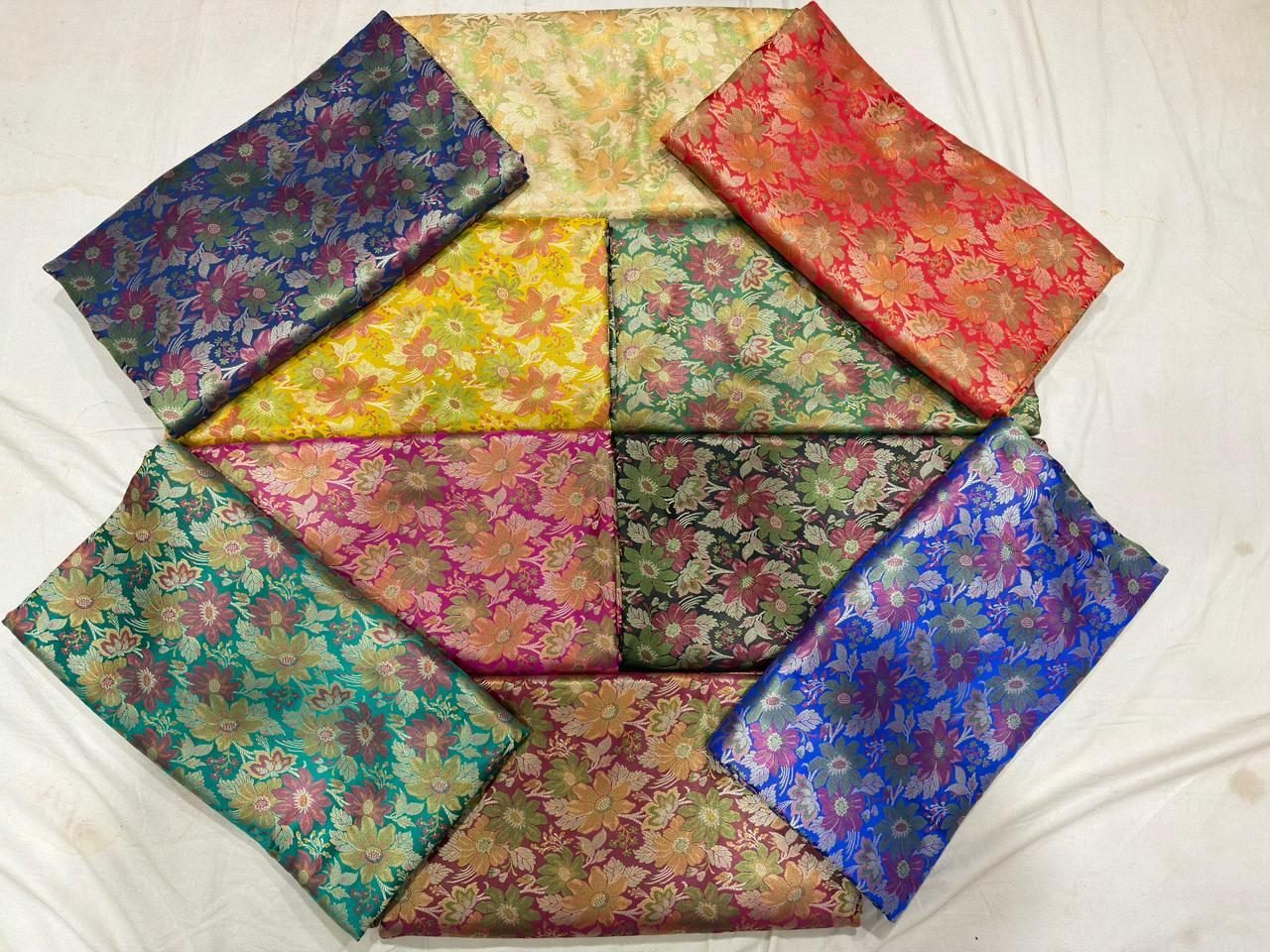
- One MOQ for every cloth - twill scarf paths and multi-colour brocade paths rarely share the same minimum reality.
- Export claims with no market named - "we ship worldwide" without asking destination for packing/docs talk is marketing noise.
- Substituting without saying so - swapping a specialty silk name for generic satin after approval changes the product.
What to verify before you choose
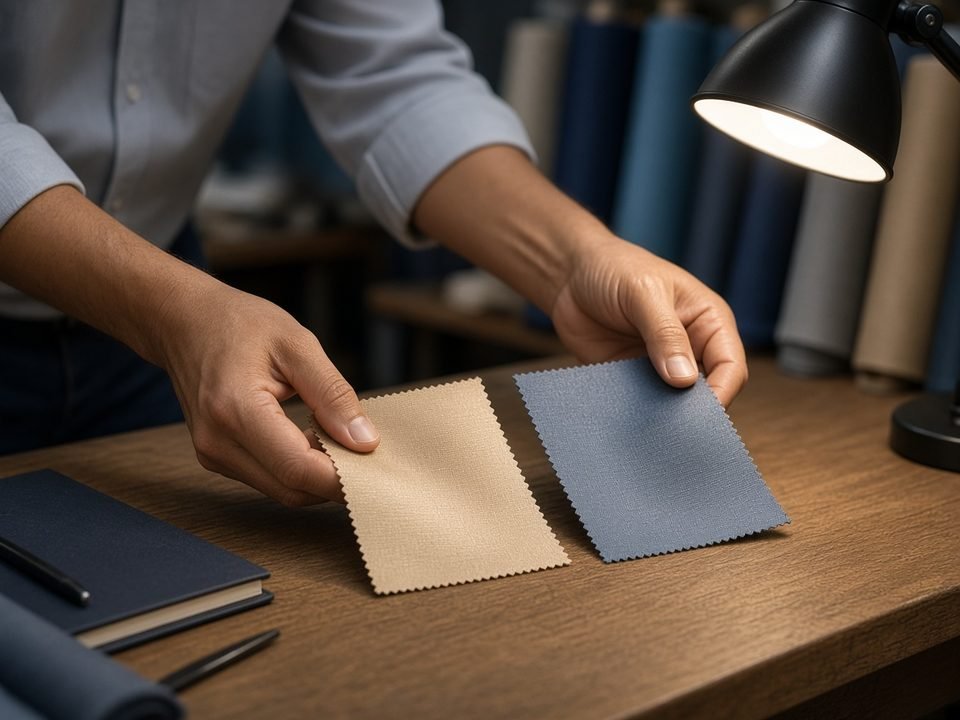
Four checks we recommend to any overseas buyer evaluating an Indian fabric supplier - including when the shortlist includes KashiFab.
1. Construction match
Does the sample match the end product need - scarf drape vs dress body vs occasion motif - not only a pretty face?
2. Brief completeness
Can the supplier work from end product, destination market, colour method, and quantity band - or do they only quote when you name a mill SKU?
3. Reorder path
Is there a written lock you can reorder against, or will every lot restart from a WhatsApp photo?
4. Honest commercial talk
After the brief, do they discuss real minimums and packing/docs for your market - without inventing certifications or transit guarantees on a landing page?
How KashiFab fits this diligence
We are not asking you to skip the scorecard. We are telling you how we expect to be evaluated.
What we own on sibling pages
Full multi-fibre fabrics list and sourcing brief: Fabric Sourcing India. Silk categories and import path: Import Silk Fabric from India.
What this page owns
Supplier selection diligence - checklist, red flags, and the questions to put in an enquiry before you choose any Indian fabric supplier for a worldwide programme.
How we work when shortlisted
Name end product and destination (US, Europe, SEA, Middle East, or other). We propose sample path, lock construction in writing, then discuss packing and documentation on the quote - without invented MOQ theatre on this page.
Diligence notes by buyer region
- United States
- Insist on shade approval under showroom light and a written usable-width note before metres. Share Incoterms preference early once commercial talk starts.
- Europe and United Kingdom
- UK, Germany, France, and Italy teams usually care about marker width and EU/UK retail light. Ask whether the supplier will lock those on sample - not after cartons leave.
- Southeast Asia
- Singapore, Malaysia, and Indonesia offices: confirm bill-to vs cutting country if they differ. Vague "Asia shipping" answers are a diligence miss.
- Middle East
- UAE, Saudi Arabia, and Qatar programmes often need occasion or structured faces. Require motif/colourway sampling before PO, and name the Gulf destination for packing talk.
We do not publish a universal MOQ, lead-time guarantee, or certification list on this page. Those depend on construction and market. A supplier who invents fixed numbers before seeing your brief is failing the same diligence test we describe above.
How to choose an Indian fabric supplier FAQ
What should I check first when shortlisting an Indian fabric supplier?
Situation: A sourcing office in the United States or Europe has three WhatsApp contacts and one polished website, all claiming export capability.
Risk: Ranking only on price or catalogue photos skips construction lock and communication quality - the two failures that usually appear after the first shipment.
What we recommend: Run the scorecard above: sample path, colour/market light, written replies, and export-path honesty. Ask each supplier the same brief (end product, destination, colour method, quantity band) and compare the quality of answers.
Next step: Send that same brief to KashiFab via the enquiry form and compare our reply against your shortlist.
How do I know if a supplier can really export to my market?
Situation: A buyer in Germany or the UAE hears "we ship worldwide" on the first call.
Risk: Worldwide is not a packing or documentation plan. Vague export talk often means the supplier has never handled your destination's paperwork needs carefully.
What we do at KashiFab: We ask for the named destination early. After sample lock, we discuss packing and documentation needs on the quote for that market - without inventing duty outcomes or fake universal checklists on a landing page.
Next step: Name country (for example US, UK, UAE, Singapore) in your enquiry and ask any shortlisted supplier the same question in writing.
Should I visit Varanasi or India before choosing a supplier?
Situation: Some brands feel a factory visit is the only way to choose.
Risk: Visits help relationships, but they do not replace sample lock and written reorder references. A good tour can still ship inconsistent lots if shade and width were never approved in writing.
What we recommend: Whether you visit or work remotely, keep the same diligence: sample, approve construction in your market light, then commercial talk. For Varanasi/Banarasi trade background, see related trade guides - do not treat them as a substitute for this scorecard.
Next step: Start with a sample enquiry; schedule a visit later if the programme volume justifies it.
How is choosing a supplier different from choosing a fabric?
Situation: Buyers land on Fabric Sourcing India or Import Silk and think those pages already choose the supplier.
Difference: Fabric pages help you name cloth and use cases. This page helps you evaluate whether the company behind the cloth is workable for an overseas programme.
How to use both: Pick a fabric direction on Fabric Sourcing India or Import Silk Fabric from India, then use this scorecard to diligence the supplier relationship - including us.
What are fair questions to ask before a first purchase order?
Situation: First-time importers worry about sounding "difficult" and skip hard questions.
Risk: Soft questions produce soft answers. Soft answers produce hard surprises after goods land.
Ask at minimum: (1) sample path and what gets locked in writing, (2) how shade is approved for my market light, (3) usable width confirmation, (4) how reorders reference the approved sample, (5) how packing/docs will be discussed for my destination, (6) whether this path is stock/standard or custom development.
Next step: Paste those questions into the enquiry form with your end product and destination.
How should US and European buyers evaluate colour capability?
Situation: A US showroom and an EU boutique often approve shade under different light than an Indian mill floor.
Risk: Approving only under mill light creates drift after import - especially on scarf twills and apparel satins.
What good suppliers do: Work from Pantone, lab dip, or physical swatch; ask where you sell; ask you to approve the sample in sell light. Multi-colour programmes need colourway samples, not one hero photo.
Next step: Tell shortlisted suppliers your colour method and destination light in the first brief.
What if I only have a reference swatch and no supplier yet?
Situation: Design teams in Singapore or the UK hold a cutting and need both a fabric match and a workable Indian supplier.
Risk: Shopping the swatch photo to many contacts without a diligence frame creates conflicting quotes and no lock.
What we do: Send the swatch or clear macros plus end product and destination. We map construction, propose a sample path, and you can still score our communication against the checklist above.
Next step: Use Send Enquiry with photos attached via your follow-up email if the form cannot carry files, and ask for a written sample plan.
How do I avoid suppliers who invent MOQ and lead times?
Situation: Landing pages and chat replies publish one MOQ and one week count for every cloth.
Risk: Invented numbers feel decisive and usually fail when construction or colour count changes.
Diligence move: Prefer suppliers who quote minimums after seeing construction, colourways, and quantity band. At KashiFab we refuse to invent fixed MOQ or transit guarantees on this page for that reason.
Next step: Send the brief fields you know; treat any one-size number before the brief as a red flag.
Should I use trade-guide supplier pages or this diligence page?
Situation: Older Varanasi/Banarasi trade guides (authentic/trusted supplier content) still rank for some searches.
How we split: Trade guides give local trade context. This page owns the overseas buyer diligence checklist and scorecard. Use both: context from guides, decision method from here - and link to live sourcing/import pages for cloth.
Next step: Run the scorecard, then enquire with gaps - do not treat a heritage essay as a PO approval.
When should I choose custom development instead of a standard supplier path?
Situation: The brief needs a new construction, exclusive colour story, or written development stages - not only metres of a known face.
Risk: Forcing a stock path into a development brief creates mismatch and missed timelines.
What we do: If diligence shows you need development levers, use Custom Fabric Development and related children. If you need multi-fibre sourcing choice first, stay on Fabric Sourcing India. This page still helps you evaluate whether the partner can run either path honestly.
Next step: Say "standard metres" vs "development" in your enquiry so we route correctly.
Ready to diligence your shortlist - or work with KashiFab?
Mark the scorecard, name your end product and destination market, and send the gaps you still need answered. We will reply with a clear sample-first path for overseas programmes.