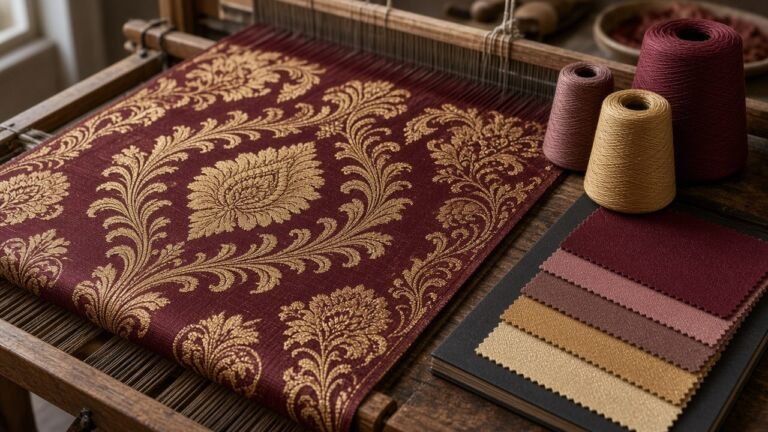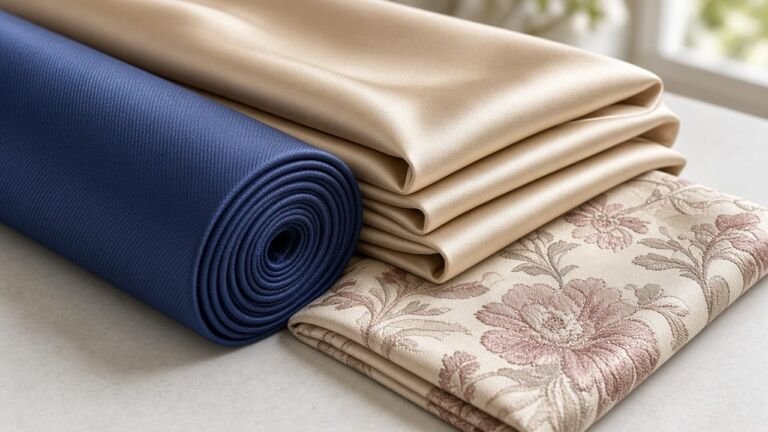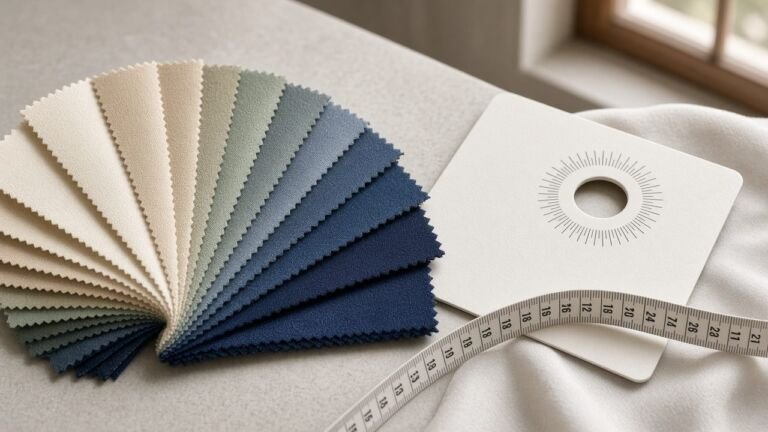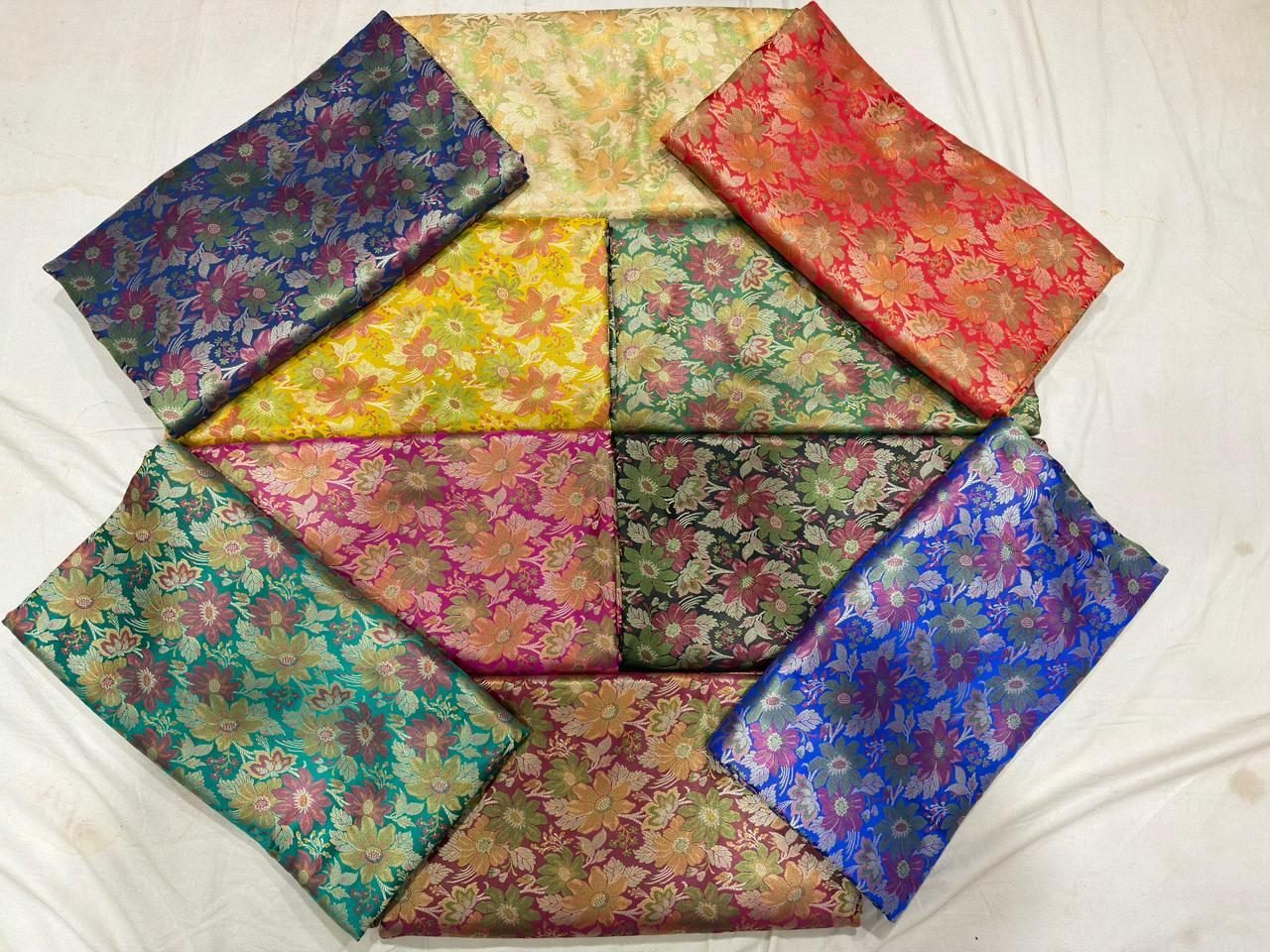
Fabric development process - Varanasi export
Fabric development process
From your reference to sampling, colour matching, development sample, written approval, bulk metres, and QC - a clear stage desk for brands and manufacturers who need the path spelled out before they buy.
Export desk
Business enquiry
Who this process page is for
Brand and private-label teams
You need shade, GSM, and hand locked before a season drop - not a vague “custom silk” promise.
Garment manufacturers
You plan markers against usable width and a locked sample so cutting does not drift mid-lot.
Sourcing offices (US / UK / EU)
You need stage windows, QC options, and export packing stated on the quote for the destination you name.
Teams reordering next season
You want continuity from a prior locked sample - same construction notes, checked against yarn and loom availability.
Process map
Seven stages. Jump in, then read the stage FAQ under each block.
What you receive at each stage
New section - a quick deliverables strip so buyers know what comes back before they scroll the deep FAQs.
| Stage | You send | You receive |
|---|---|---|
| Reference | Swatch, Pantone, artwork, tech pack, end product | Feasibility note and sampling path |
| Sampling | Approved brief + sample fees if quoted | Physical / lab samples for hand and shade |
| Colour match | Colour standard and lighting notes | Lab dips / shade trials toward a lock |
| Dev sample | Combined lever brief (colour, GSM, width, design) | Production-intent sample to approve |
| Approval | Written sign-off | Locked production standard for the PO |
| Bulk | PO against the locked sample | Metres / goods QC’d to that standard |
| QC / pack | Inspection preference if any | Inspection notes + labelled export cartons |
Stage 01
Send your fabric reference
A strong brief shortens sampling. Send what you have - we tell you what is enough to start and what still needs a loom trial.
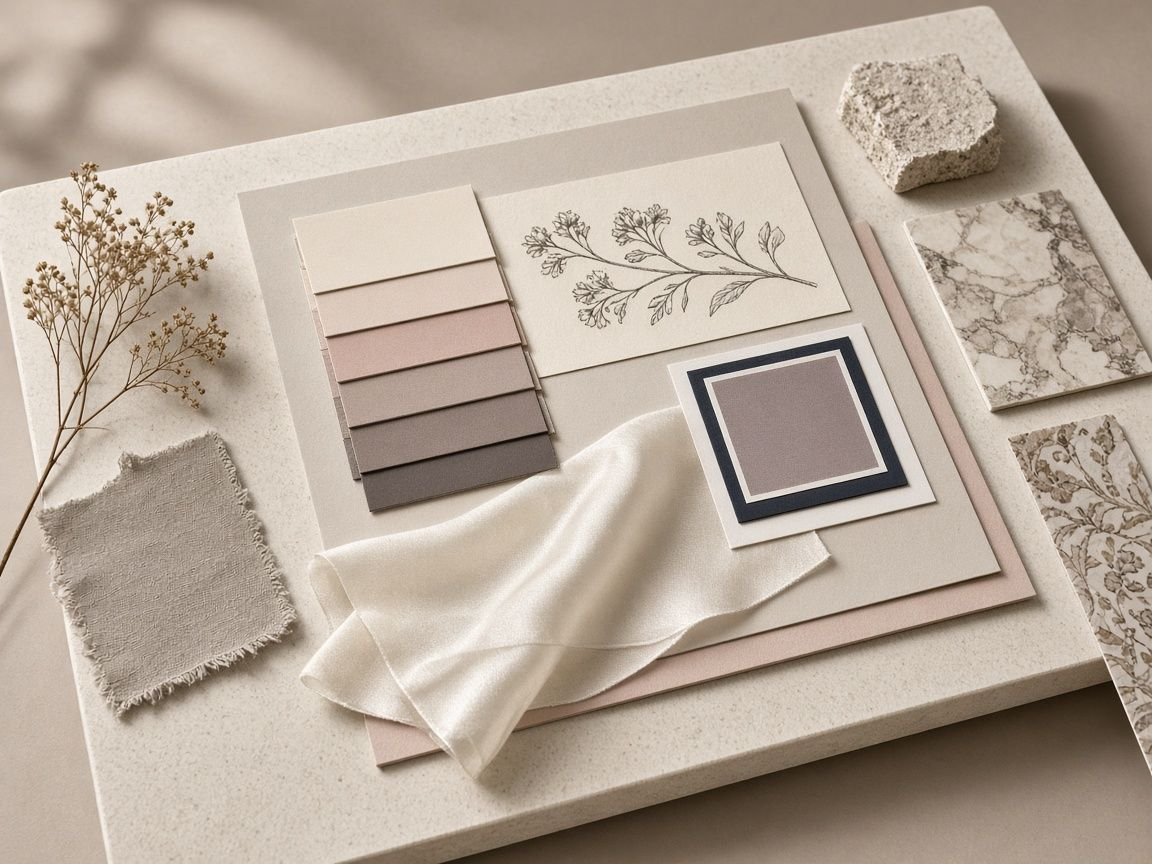
- Physical swatch, Pantone / lab dip target, or high-resolution fabric photo
- Artwork or tech pack for jacquard / motif programmes
- End product, target metres, destination, and delivery window
- Path note: general fabric or silk fabric
FAQ - sending a reference
What counts as a good fabric reference?
Best case is a physical swatch plus end-product notes. Strong second options are a Pantone target with construction notes, or a tech pack with motif scale. A phone photo alone can start a conversation, but shade and hand usually need a better standard before we lock a development sample.
Can we start from a photo only?
Yes for an early feasibility reply. Photos are weak for exact shade and hand, so we will usually move you into sampling or ask for a couriered swatch before any production lock. Name the end product and fibre path in the same message so we do not guess.
Is a tech pack required for jacquards?
Not always, but motif scale, repeat, and colour placement are much faster with a tech pack or clear artwork. Without it we can still develop from a selected design direction, then lock scale on the development sample before bulk.
How do you treat confidential artwork?
Share only what you need for the brief. We use references to develop your programme and do not publish client artwork on marketing pages. If you need an NDA path, say so in the RFQ before you attach files.
Can one RFQ include multiple references?
Yes. Label each reference (A/B/C) with silk type or construction, colour count, and metres. Multi-reference briefs often need staged sampling so colourways and constructions do not mix in one sample bag.
Stage 02
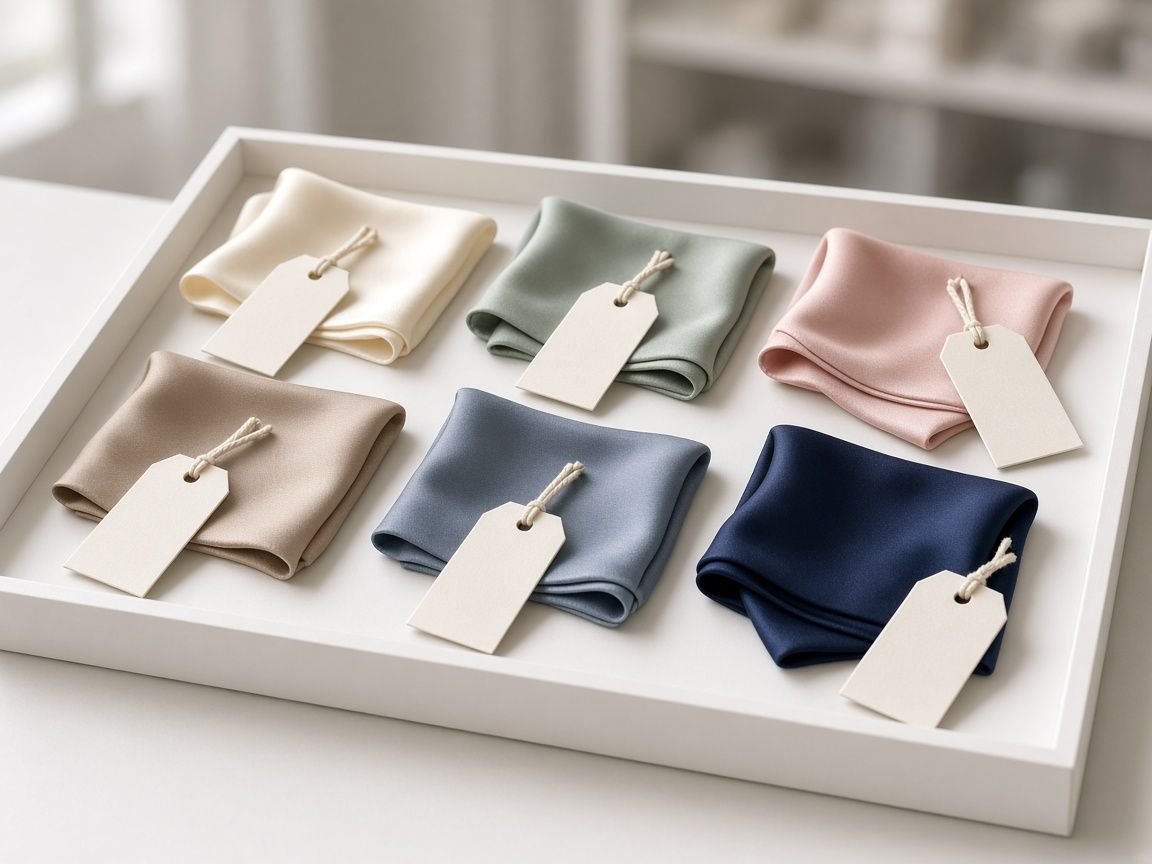
Fabric sampling
Sampling is how you feel the cloth in your market light before metres. Windows and sample costs are stated on the quote - not as a sitewide free promise.
- Lab / development cuts for custom programmes
- Courier to your office when the path is agreed
- Revision rounds scoped when shade or hand misses
FAQ - sampling
What is the difference between a lab sample and a hanging sample?
A lab / development sample is built to prove construction, shade, GSM, and hand for a custom programme. A hanging or stock-oriented sample is useful for browsing a face quickly, but it is not always the production lock for a new colourway or new GSM. Custom programmes almost always need a development sample before bulk.
Who pays for samples and courier?
Sample and courier costs depend on the programme and destination. We state them on the quote. Some sample fees can be credited against a later bulk PO when that is agreed in writing - ask for that note on the quote if you need it.
How many revision rounds are normal?
One focused revision after the first sample is common when shade or hand is close. Large redesigns (new motif, new construction) are a new sample step, not a free tweak. We flag that before re-looming so timeline honesty stays intact.
Can colourways sample in parallel?
Often yes when yarn and loom slots allow. Parallel colourways help season drops, but each colourway still needs its own approval before that colour enters bulk. Multi-colour programmes affect MOQ and lead time - we call that out up front.
What is a typical sampling window?
Many custom silk programmes land lab samples in roughly 2-4 weeks after brief lock, but construction complexity, colour count, and loom booking can move that. Your quote carries the programme dates - not a generic sitewide promise.
Stage 03
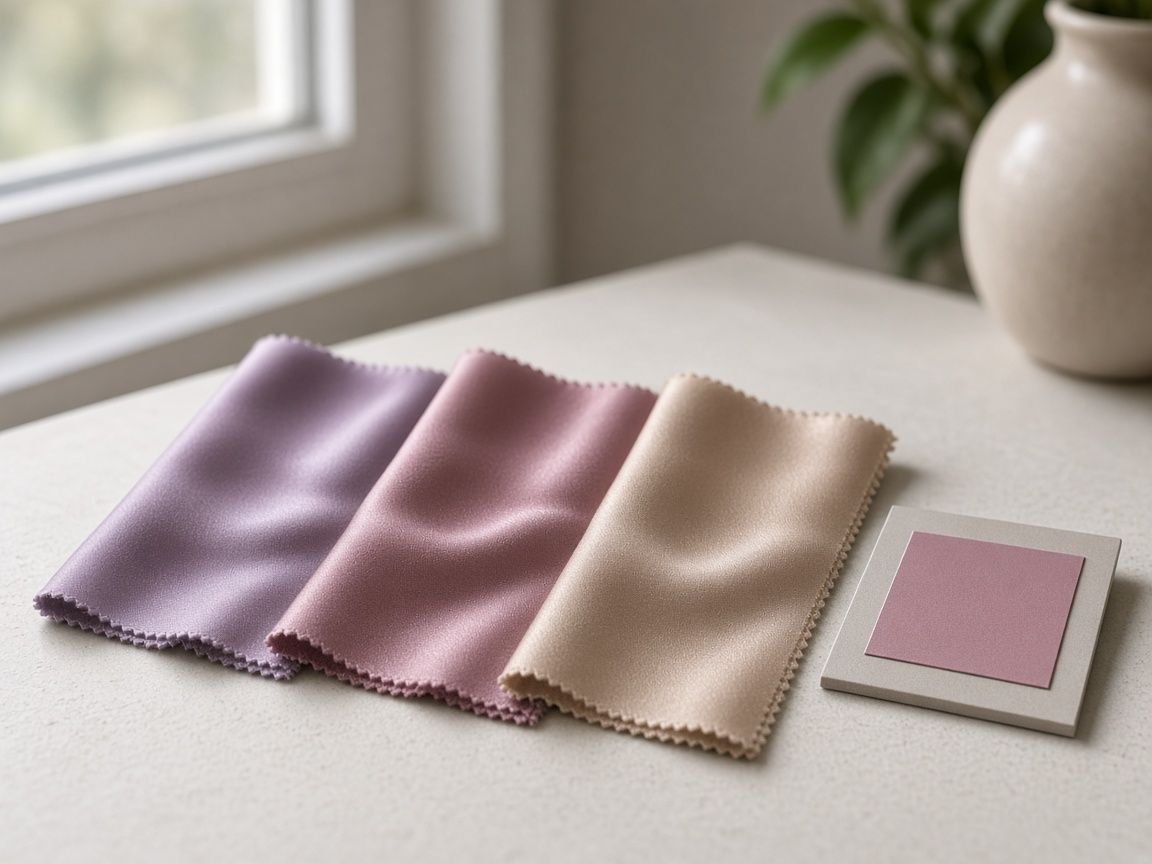
Colour matching
Shade is matched to your standard, then checked in a light condition that makes sense for your market - not only under mill lamps.
- Pantone, lab dip, or physical swatch standards
- Single solids and multi-colourway stories
- Reorder notes kept from the approved shade lock
FAQ - colour matching
Pantone or physical swatch - which is better?
A physical swatch on the same fibre family is often strongest for silk hand and lustre. Pantone is excellent when you already run a digital colour system. Many programmes use both: Pantone as the target, swatch as the hand check. Tell us which one is the commercial lock.
Why does market light matter?
Shade can shift between mill light and your store or studio light. We ask you to check samples in the light you sell under. If you need a specific illuminant note on the quote, add it to the RFQ so sampling instructions stay aligned.
Can you hold colour for next-season reorder?
Yes when you reorder the same locked construction and shade standard. We keep programme notes from the approved sample. Yarn dye lots and loom conditions are re-checked at reorder time so continuity stays honest.
How do multi-colourway programmes work?
Each colourway is sampled and approved before that colour enters bulk. You can prioritise hero colours first and add secondary colourways later. Colour count changes MOQ and timeline - we state that on the quote instead of hiding it.
What if an exact match is not possible?
Some references on a different fibre or finish cannot be cloned 1:1 on silk. We say so early, offer the closest feasible lab dips, and only lock when you accept the commercial shade. No silent “close enough” into bulk.
Stage 04
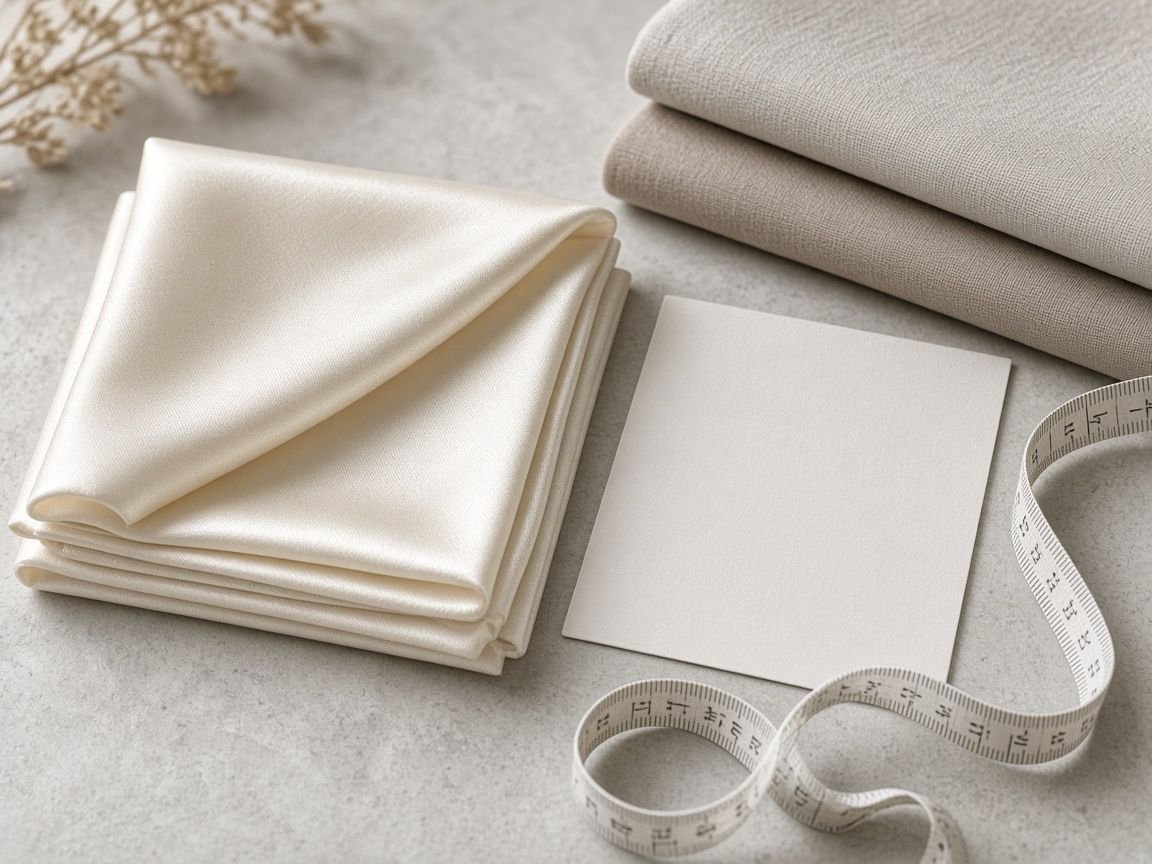
Development sample
This is the production-intent cloth. Colour, construction, GSM / hand, usable width, and design scale should be checkable on one approved standard.
- Locks the levers you asked to customize
- Becomes the QC reference for bulk
- Silk and general fabric paths both use this gate
FAQ - development sample
What exactly gets locked on the development sample?
Typically shade, construction / weave face, GSM or momme band, usable width, hand / finish, and motif scale when relevant. Your quote and approval note list the locked fields so bulk QC has a clear standard.
Can one sample cover colour, GSM, and width together?
Yes when those levers are part of the same brief. That is the point of a development sample. If you change one lever hard after the first sample (for example a much heavier GSM), expect a new sample step before bulk.
How is a silk development sample different?
Silk jacquards and metal-thread faces need tighter checks on motif scale, metal tone, and hand. Scarf twills care more about drape and opacity. Say silk path in the RFQ so sampling instructions match the construction.
What if hand feels wrong in our market?
Report it against the sample with photos and notes. We treat hand misses as a sample revision, not as something to “fix in bulk.” Bulk starts only after you accept the hand on the written lock.
Do you keep the approved sample on file?
Yes - programme notes and the approved standard guide bulk and later reorders. Keep your own retained sample too so both sides can compare if a later lot is questioned.
Stage 05
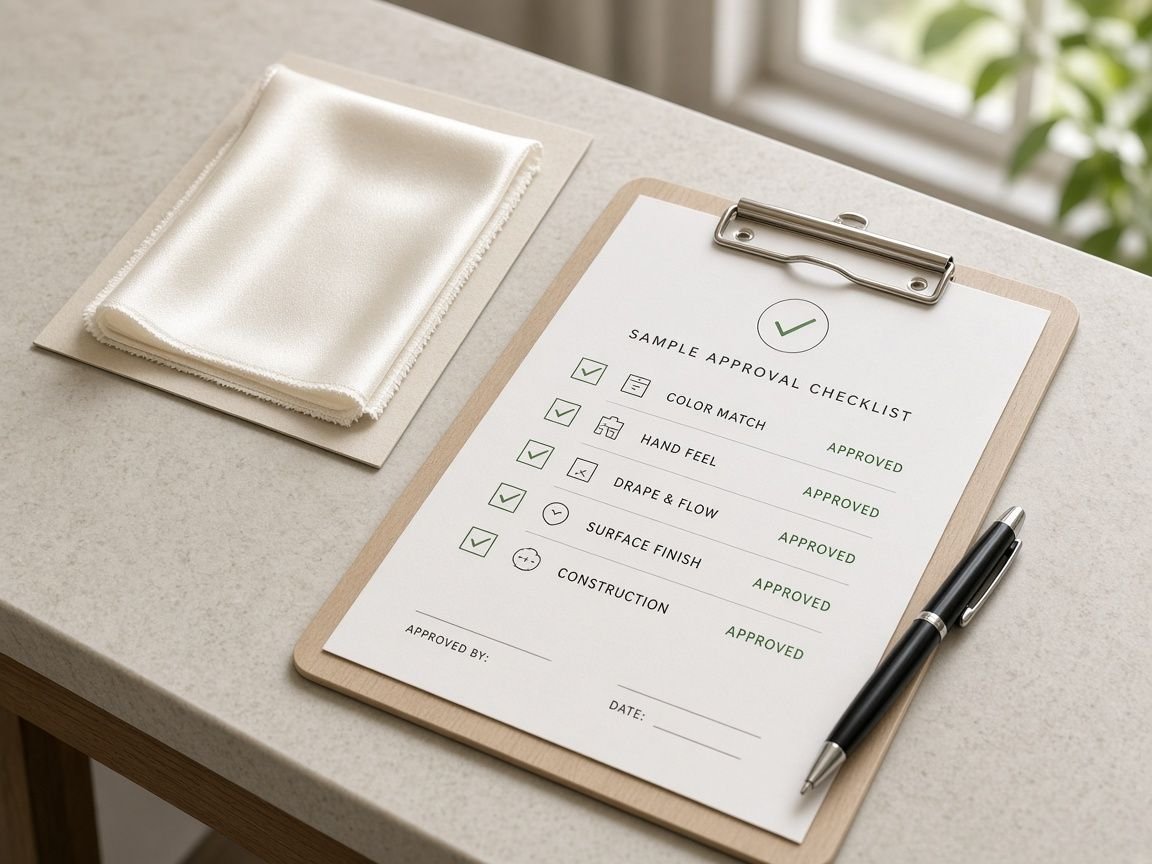
Sample approval
Bulk does not start on a verbal “looks fine.” Written approval turns the sample into the production standard for the PO.
- Written lock of shade, construction, width, hand, design
- Revision path if anything is still open
- Clear trigger for bulk scheduling
FAQ - sample approval
What should the written approval include?
Sample ID / programme reference, locked shade, construction, GSM / hand, usable width, motif notes if any, buyer name, and date. Attach photos of the retained sample if your team is distributed across offices.
What if we change the design after approval?
Post-approval changes can move cost and timeline. We pause bulk, open a new sample step when needed, and only restart metres after a fresh written lock. Treat the first approval as the production truth until you replace it.
Can we approve colour but not motif yet?
Partial locks are possible when you say so clearly. Bulk for a colour-only solid can proceed on a colour lock, while a jacquard motif stays in development. Mixed signals without a written split are how programmes slip - we will ask you to separate the locks.
Who should sign on the buyer side?
Whoever owns commercial risk for shade and hand - usually product development or the sourcing lead named on the PO. Multiple conflicting emails are not an approval. One clear written lock is.
When is bulk scheduled?
After written approval and PO terms are in place. Loom booking follows the lock, which is why early fake “bulk dates” without approval are not useful. Your quote states the post-approval production window.
Stage 06
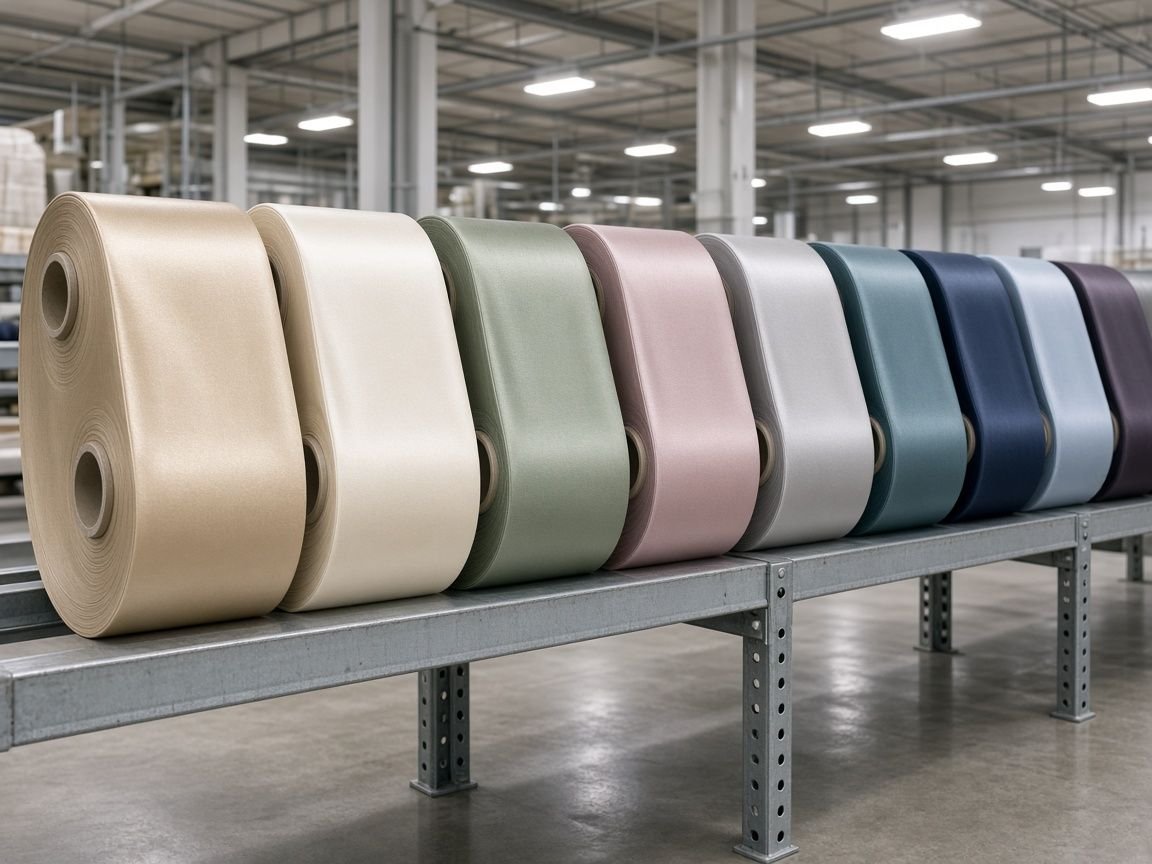
Bulk production
Metres run against the approved sample. MOQ and lead time are programme-specific - quoted after the brief, not invented as a public one-size number.
- Production only after written sample lock
- Multi-colourway bulk after each colourway approval
- Export packing planned with the destination
FAQ - bulk production
When do bulk metres actually start?
After written sample approval and commercial confirmation on the quote / PO. Starting bulk before lock is how shade and hand disputes happen - we do not treat that as the default path.
What is the MOQ?
MOQ depends on silk or fabric type, colour count, and loom booking. We quote a real minimum after the brief. This page does not publish a fake universal MOQ.
Can we split shipments?
Often yes when the PO and Incoterms allow. Split ship can help soft launches, but it may change packing and freight cost. Ask for split options on the quote if your warehouse needs staged receiving.
What moves bulk lead time?
Metre volume, colour count, yarn lead, loom congestion, revision after near-approval, and third-party inspection booking. Rush is only promised when loom and yarn allow - never as a sitewide express badge.
How do reorders work from a locked sample?
Send the prior programme / sample reference with the new metres and destination. We re-check yarn and loom availability, then confirm whether the same lock can run or whether a refresh sample is safer.
Stage 07
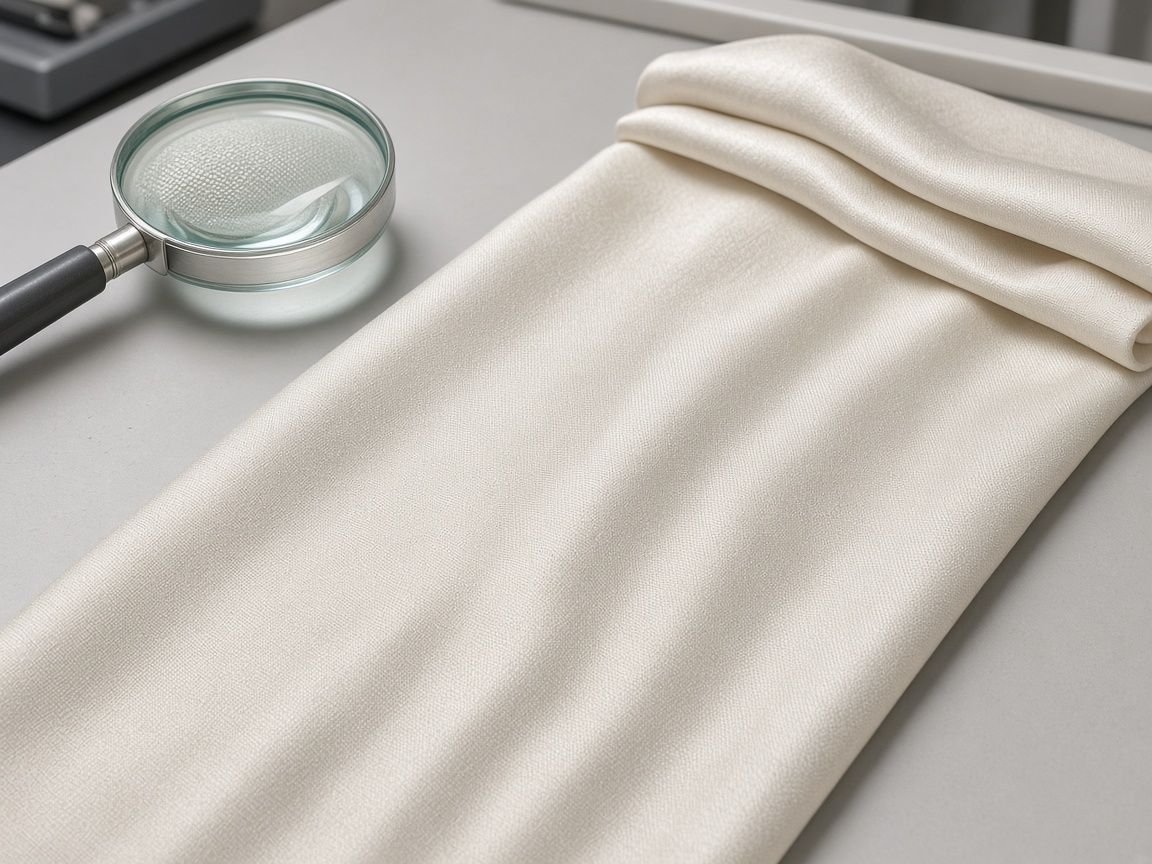
Quality inspection
QC checks bulk against the approved sample before export pack. Third-party inspection can be booked into the timeline when your PO requires it.
- Shade and construction checked to the lock
- Obvious weave / dye defects screened
- Carton labels: fibre, colour, metres, PO reference
FAQ - quality inspection
What do you check in-house before pack?
Bulk is checked against the approved sample for shade and construction character, and screened for obvious weaving or dyeing defects. The approved sample is the standard - not a new interpretation on the packing day.
Can we book third-party inspection?
Yes. Tell us in the RFQ so inspection sits inside the production and ship calendar. Late inspection requests are a common cause of missed sailings.
How are cartons labelled for our warehouse?
Outer labels carry fibre, colour, metres, and your PO reference so lots can be sorted without opening every carton. Inner roll or fold method is confirmed with the programme.
What if we find an issue after arrival?
Document lot / carton IDs, photos against your retained sample, and metre counts quickly. Claims are assessed against the written lock and the shipped lot records. Clear receiving notes help both sides move fast.
Do Incoterms change QC responsibility?
Incoterms define risk and cost points for freight - they do not replace the sample lock. QC against the approved sample still happens before pack on manufacturer programmes; freight terms are confirmed on the quote for your destination.
Timeline at a glance
New section - typical windows. Your quote states programme dates after the brief.
| Stage | Typical window | What can move it |
|---|---|---|
| Brief review | 1-3 working days | Incomplete reference, new construction |
| Sampling / colour trials | Often 2-4 weeks after brief lock | Colour count, motif complexity |
| Dev sample revisions | Your rounds | Hand or shade misses, redesign |
| Bulk after approval | Often 4-8+ weeks | Metres, yarn lead, multi-colourway |
| QC + export handoff | Quoted with programme | Third-party inspection, Incoterms |
Silk path vs general fabric path
New section - same stages, different pressure points.
General fabric path
- Colour lots and GSM for cut-and-sew stability
- Width locked to marker plans
- Finish tuned for handling in the sewing line
Silk fabric path
- Motif scale and metal tone on jacquards
- Hand and lustre checked in market light
- Scarf vs apparel GSM / opacity decisions early
Levers detail: Fabric Customization. Silk types: Custom Silk Fabric Development. Metres desk: Custom Silk Fabric for Bulk Orders.
What slows a fabric development programme
New section - common slip points we flag early so timelines stay honest.
- Weak reference - photo-only shade targets without a swatch or Pantone lock.
- Late lever changes - new GSM or motif after a near-final sample.
- Unclear approval owner - conflicting emails instead of one written lock.
- Colourway creep - adding colours after bulk yarn is booked.
- Inspection booked late - third-party QC requested after production is already packed.
Start the process - RFQ checklist
- Path: general fabric or silk fabric
- Reference: swatch / Pantone / artwork / tech pack
- Levers to customize (colour, GSM, width, design, weave, finish, composition)
- End product, target metres, colour count
- Destination country and needed delivery window
- Whether this is a first development or a reorder of a locked sample
- Inspection preference (in-house only or third-party)
Ready to start development?
Send the reference, path, metres, and destination. We reply with the sampling path and stage windows for your programme.